



PRODUCT INFORMATION
1. Nhat Khoa – A Reputable Supplier of Work Safety Clothing
Work safety clothing is indispensable in many industries, especially heavy industries, construction, mechanics, chemicals, etc. Safety clothing not only protects workers from hazardous factors such as dust, chemicals, sparks, impacts, etc., but also demonstrates professionalism and compliance with occupational safety regulations by the company.
Providing high-quality work safety clothing is a top priority, helping workers feel secure, increasing productivity, and minimizing the risk of workplace accidents. Furthermore, printing or embroidering company logos and information onto safety clothing helps businesses promote their brand and create a positive impression on partners and customers.
At Nhat Khoa, we pride ourselves on providing high-quality work safety clothing that meets safety standards and is suitable for a wide range of industries. With 20 years of experience, Nhat Khoa has established itself as one of the leading suppliers of protective work uniforms, perfectly meeting the requirements of businesses.
2. Compilation of Materials for Making Work Safety Clothing
At Nhat Khoa, our work safety clothing prioritizes absolute safety, featuring intelligent designs, reflective details, and durable fabrics. Wearers can easily access and use equipment when needed, while also improving visibility in dark or hazardous environments.

2.1. 65/35 Khaki Fabric
As one of the most commonly used materials at Nhat Khoa for protective clothing, 65/35 khaki fabric combines high durability with relatively good absorbency. With a fiber ratio of 65% polyester and 35% cotton, this fabric retains color well, wrinkles minimally, and maintains its shape, making it very suitable for uniform designs in frequently used work environments.
Some notable characteristics of 65/35 Khaki fabric include:
- High durability, wrinkle-resistant, and maintains its shape well, ensuring a neat appearance and long-lasting use.
- It absorbs sweat much better than many other blended khaki fabrics, increasing comfort while working.
- Reasonable price, good balance between cost and quality.
- While less breathable than 100% cotton khaki, it still ensures performance in common work environments.

2.2. Vietnamese Khaki Fabric
A familiar material in the field of office and technical uniforms, Vietnamese khaki is highly valued for its thickness, durability, and ability to maintain its shape well. This fabric is suitable for clothing designs that require a serious, neat appearance and minimal deformation during use.
Although not particularly outstanding in terms of stretch or breathability, Vietnamese khaki fabric remains a sustainable choice for designs requiring high durability and structure. Some typical characteristics of this fabric include:
- The fabric is thick and durable, helping the garment maintain its shape well and resist deformation.
- Highly durable, wrinkle-resistant, and easy to style, creating a neat and professional look for the wearer.
- Its breathability and elasticity are lower compared to other fabrics, making it more suitable for cool environments or jobs that don’t require much physical activity.

2.3. 100% Cotton Khaki Fabric
As a familiar and popular material known for its softness, breathability, and skin-friendliness, natural cotton fabric is suitable for a wide range of products, from everyday fashion to office uniforms.
Made from pure cotton fibers, this fabric provides a comfortable feel while maintaining its thickness and structure. Key characteristics include:
- Soft and smooth, comfortable to wear, providing a pleasant feeling for the user.
- The fabric is thick and holds its shape well, making it suitable for both T-shirts and shirts.
- It absorbs sweat well, is breathable, and suitable for hot and humid weather.
- Made from natural materials, safe and gentle on the skin.
- Pure cotton fibers are prone to wrinkling and may shrink slightly after washing.
- It may become slightly fuzzy after some use.
Comparison table of fabrics used for protective clothing
|
Characteristic |
65/35 Khaki Fabric |
High-Quality Stretch Khaki Fabric |
|
Durability |
High |
Very high |
|
Cool and airy |
Good |
Very good |
|
Stretchable |
Little |
Good |
|
Cost |
Reasonable |
High |
|
Application |
Diversity |
Flexible work |
3. Several Methods for Printing/Embroidering Logos onto Work Safety Clothing

3.1. Screen Printing
Screen printing is one of the most popular and oldest printing techniques in the garment industry. The screen printing process involves using a mesh screen to transfer ink onto the fabric surface through an ink-repellent barrier.
Advantage
- High durability.
- Bright colors.
- It can be printed on any type of fabric.
- Low cost for large quantities.
Disadvantages
- Not suitable for designs requiring high detail, using blue colors, or ombre effects.
- If customers print in small quantities, the price may be higher compared to other printing options.

3.2. DTG (Direct to Garment)
DTG printing is a method of printing directly onto clothing using a machine digital printer. This technique uses specialized inks that penetrate directly into the fabric fibers, creating sharp and detailed images. DTG printing allows for the printing of complex, multi-colored images with no limit on the number of colors.
Advantage
- It can print images requiring high detail and accuracy, in multiple colors.
- There is no limit to the number of colors.
- The shirt is colorfast and looks very elegant when worn.
- Suitable for a wide variety of fabrics, with no limitations and capable of printing on many different surfaces, including cotton.
Disadvantages: Because the printed images are very sharp, the price is higher compared to other printing methods.
3.3. Heat Transfer Printing
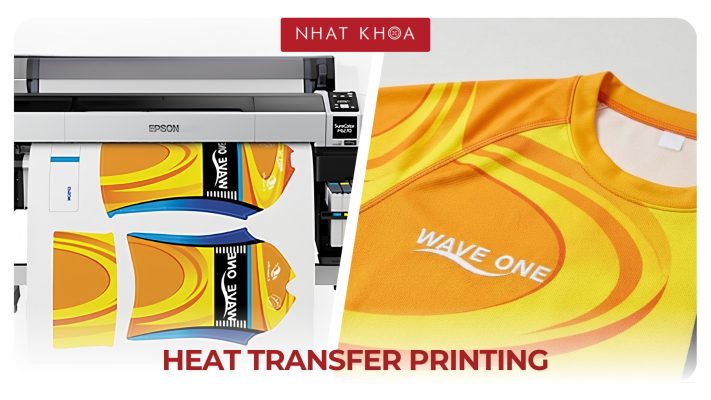
Heat transfer printing Heat transfer printing is a process that uses high temperatures to transfer ink from specialized printing paper onto the surface of the fabric. The ink blends into the fabric fibers, creating realistic and vibrant images. Heat transfer printing is divided into several different types:
- Dye Sublimation (AOP – All Over Printing): This printing technique uses high temperatures to transfer ink from specialized printing paper onto the fabric material. This method is ideal for full-body printing on polyester fabrics.
- Heat Transfer Decal/Vinyl: This technique uses heat and pressure to transfer images from decals/vinyl onto fabric. It’s popular for logo and image printing and is widely used in the production of custom t-shirts and small-quantity uniforms.
- PET Heat Transfer (DTF – Direct to Film): This printing technique uses PET film to transfer ink onto fabric. This method allows printing on a wide variety of fabrics, from cotton to polyester.
Plastisol Heat Transfer (Silk Heat Transfer): This technique uses plastisol ink to print onto paper and then transfers it onto fabric using heat and pressure. This method is preferred for large-scale printing.
Advantages and disadvantages of heat transfer printing techniques
|
Printing technique |
Advantage |
Disadvantages |
|
Dye Sublimation (AOP – All Over Printing) |
|
|
|
Heat Transfer Decal/Vinyl |
|
Suitable for small quantity orders. |
|
PET Heat Transfer (DTF – Direct to Film) |
|
The product’s durability is not as good as other printing techniques. |
|
Plastisol Heat Transfer (Silk Heat Transfer) |
|
|

3.4. Embroidery
Embroidery is a technique that uses thread and an embroidery machine to create images or letters on the surface of fabric. It is a traditional method but remains popular due to its durability and elegant appearance.
Advantage
- High durability
- Non-fading
- Creates a luxurious feel when worn.
Disadvantages
- It’s not possible to embroider small details.
- Generally, embroidery costs more than printing.
- Large embroidered areas on a garment can feel slightly bulky and potentially uncomfortable. However, smaller embroidery usually doesn’t cause this discomfort.
Compare the advantages and disadvantages of each printing technique.
To help you visualize and easily compare the techniques, we have compiled the advantages and disadvantages of each method in the table below:
|
Printing techniques |
Advantage |
Disadvantages |
|
Silk screen printing |
Inexpensive for bulk printing, vibrant and durable colors. |
It’s not possible to print complex, multi-colored images, and the printing plate preparation time is long. |
|
In decal |
We can print detailed, multi-color images, even in small quantities. |
The durability is low, it peels easily, and the printed surface is stiff. |
|
Heat transfer printing |
Available in a variety of colors, with good adhesion to many types of fabrics and surfaces. |
It can only be printed on polyester fabric, is expensive, and the printed image may not be perfectly sharp. |
|
Digital printing (DTG) |
It produces detailed and vibrant images with high colorfastness, looks luxurious when worn, and is suitable for many types of fabrics and surfaces, including cotton. |
High cost, colorfastness depends on the ink and fabric. |
|
Embroidery |
Highly durable, with a luxurious and classy appearance that won’t fade. |
High cost, unsuitable for printing complex, multi-color images, and long processing time. |
5. Work Safety Clothing Size Chart at Nhat Khoa Uniform
Nhat Khoa Uniform offers a diverse color palette for work safety clothing, ranging from neutral shades like gray, navy blue, and beige to vibrant colors like orange, yellow, and red. Customers can choose colors that suit their industry, brand, and preferences.

7. How to Store Work Safety Clothing
To ensure that work safety clothing remains durable, aesthetically pleasing, and provides maximum protection, the following points should be noted:
- Wash separately: Protective clothing should be washed separately from other clothes to avoid fading or staining.
- Use the appropriate detergent: Avoid using harsh detergents as they can damage the fabric and reduce the protective properties of the jacket.
- Air dry naturally: Protective clothing should be air-dried in a cool, well-ventilated place, away from direct sunlight, to preserve the color and durability of the fabric.
- Iron (if needed): If ironing is necessary, adjust the temperature to suit the fabric material.
Proper storage: When not in use, protective clothing should be hung in a dry, well-ventilated place, away from moisture.

10. Applications of Protective Workwear
Work safety clothing is widely used in many industries and fields:
- Build: Construction workers, engineers, site supervisors, etc.
- Mechanical: Welders, lathe operators, machinery repair technicians, etc.
- Chemicals: Laboratory staff, chemical production workers, etc.
- Electricity: Electricians, electrical engineers, etc.
- Mining: Miners, mining engineers, etc.
- Environmental sanitation: Sanitation workers, garbage collectors, etc.
- Transportation: Loaders, drivers, etc.
Agriculture: Farmers, gardeners (when spraying pesticides, etc.)
11.1. Clearly define usage needs
Before ordering protective clothing, businesses need to clearly define factors related to the industry, work environment, potential hazards, and specific requirements regarding color, style, quantity, and size. This ensures that the protective clothing is designed and manufactured appropriately, maximizing protection and usability.
11.2. Choose the right fabric material.
Choosing the right fabric is crucial, directly impacting the durability, protection, and comfort of protective clothing. Depending on the nature of the work and the working environment, businesses should consider fabrics such as 65/35 Khaki, which offers durability, good sweat absorption, and a reasonable price, or premium stretch Khaki, which is soft, stretchy, and highly durable.
11.3. Choose a suitable design
The design of protective clothing needs to ensure the following elements:
- Safe: Protective clothing must cover vulnerable body parts and have necessary protective features (e.g., reflective strips, tool pockets, etc.).
- Comfortable: Protective clothing must fit properly, neither too tight nor too loose, and should not restrict movement.
- Convenient: Includes tool pouches and adjustable size components (if needed).
Match the brand (if needed): Colors, logo, company information, etc.
11.4. Choose a reputable garment factory.
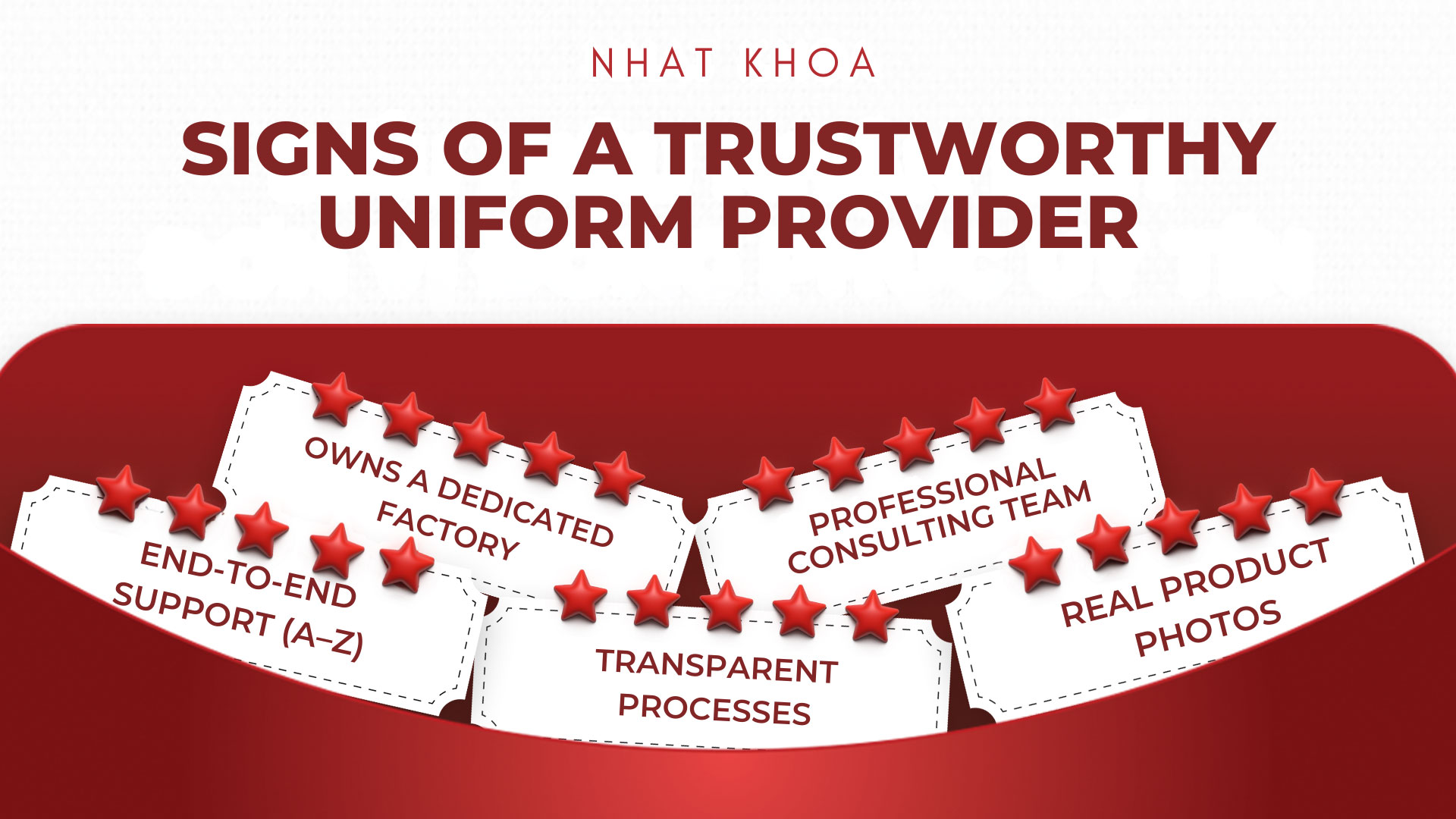
The garment factory plays a crucial role in determining the quality of the final product. Therefore, you need to research and choose a reputable garment factory that meets the following criteria:
- Experience: Priority will be given to garment factories with many years of experience in the field of uniform manufacturing, especially protective clothing.
- Machinery and equipment: The garment factory needs to be fully equipped with modern machinery and equipment to ensure the quality of stitching and printing/embroidery.
- Staff: The skills of the tailors and the design team play a crucial role, directly affecting the quality of the product.
- Customer service: Choose a garment factory that offers professional and dedicated customer service and consultation.
- Price: Compare prices from multiple garment factories to find the best option that fits your budget.
Customer reviews: Find out reviews and feedback from previous customers to get an objective view of the garment factory’s service quality.
12. Nhat Khoa – A Reputable Workwear Manufacturing Company in Ho Chi Minh City
Nhat Khoa is proud to be a company with over 20 years of experience in the field of uniform manufacturing, especially in work safety clothing. We have been and are currently supplying safety clothing to many businesses in various industries, from construction and mechanics to chemicals and electricity, etc.
Experience and reputation
With over 20 years of experience, Nhat Khoa has built a solid reputation in the workwear and protective clothing market. We are a trusted partner of many large and small businesses nationwide, providing various products and services. product High quality, meeting the strictest safety standards.
Professional team
Nhat Khoa boasts a team of skilled designers and tailors with at least 15 years of experience in the field of protective workwear manufacturing. Our team not only has a deep understanding of fabrics and sewing techniques, but also constantly updates itself with the latest design trends, ensuring that we deliver products that are both safe and aesthetically pleasing.
Free consultation and design
Understanding the importance of building brand image and ensuring worker safety, Nhat Khoa provides free consultation and design services for work safety clothing tailored to customer requirements. We will listen to your opinions and requests to create unique designs that accurately reflect the style and values of your business.
Competitive prices
As a direct garment factory, without any intermediaries, Nhat Khoa is committed to offering customers the most competitive prices on the market. We optimize our production process and import raw materials directly from reputable suppliers to minimize costs and maximize benefits for our customers.
Quality assurance and on-time delivery.
Product quality and delivery time are two top priorities for Nhat Khoa. We use high-quality fabrics with clear origins and strictly control the production process to ensure that every work safety garment is of the highest quality. At the same time, we are committed to delivering on time as agreed with our customers.
Top Styles Popular Worker Uniforms Currently the Best
With the detailed information above, we hope you have gained an overview of the importance of work safety clothing, as well as the criteria for choosing the right product. Let Nhat Khoa be your partner in ensuring safety, professionalism, and efficiency in your work. Contact us today for the best advice and pricing!

10. Ứng Dụng Của Áo Bảo Hộ Lao Động
Áo bảo hộ lao động được sử dụng rộng rãi trong nhiều ngành nghề, lĩnh vực:
- Xây dựng: Công nhân xây dựng, kỹ sư, giám sát công trình,…
- Cơ khí: Thợ hàn, thợ tiện, thợ sửa chữa máy móc,…
- Hóa chất: Nhân viên phòng thí nghiệm, công nhân sản xuất hóa chất,…
- Điện lực: Thợ điện, kỹ sư điện,…
- Khai thác mỏ: Công nhân khai thác, kỹ sư mỏ,…
- Vệ sinh môi trường: Công nhân vệ sinh, nhân viên thu gom rác thải,…
- Giao thông vận tải: Nhân viên bốc xếp, lái xe,…
- Nông nghiệp: Nông dân, người làm vườn (khi phun thuốc trừ sâu,…)
11.1. Xác định rõ nhu cầu sử dụng
Trước khi đặt may áo bảo hộ, doanh nghiệp cần xác định rõ các yếu tố về ngành nghề, môi trường làm việc, các nguy cơ tiềm ẩn và yêu cầu cụ thể về màu sắc, kiểu dáng, số lượng và kích cỡ. Việc này đảm bảo áo bảo hộ được thiết kế và sản xuất phù hợp, đáp ứng tối đa nhu cầu bảo vệ và sử dụng.
11.2. Chọn chất liệu vải phù hợp
Lựa chọn chất liệu vải đóng vai trò quan trọng, ảnh hưởng trực tiếp đến độ bền, khả năng bảo vệ và sự thoải mái của áo bảo hộ. Tùy thuộc vào tính chất công việc và môi trường làm việc, doanh nghiệp nên cân nhắc các loại vải như Kaki 65/35 với độ bền, thấm hút mồ hôi tốt và giá hợp lý, hoặc Kaki Thun Cao Cấp mềm mại, co giãn tốt, cùng độ bền cao.
11.3. Chọn thiết kế phù hợp
Thiết kế áo bảo hộ cần đảm bảo các yếu tố:
- An toàn: Áo bảo hộ phải che chắn được các bộ phận cơ thể dễ bị tổn thương, có các chi tiết bảo vệ cần thiết (ví dụ: Dải phản quang, túi đựng dụng cụ,…).
- Thoải mái: Áo bảo hộ phải vừa vặn, không quá chật hoặc quá rộng, không gây cản trở vận động.
- Tiện dụng: Có đủ túi đựng dụng cụ, các chi tiết điều chỉnh kích thước (nếu cần).
- Phù hợp với thương hiệu (nếu cần): Màu sắc, logo, thông tin công ty,…
11.4. Chọn xưởng may uy tín
Xưởng may đóng vai trò quyết định đến chất lượng sản phẩm cuối cùng. Do đó, bạn cần tìm hiểu và lựa chọn xưởng may uy tín, đáp ứng các tiêu chí sau:
- Kinh nghiệm: Ưu tiên các xưởng may có kinh nghiệm lâu năm trong lĩnh vực may đồng phục, đặc biệt là áo bảo hộ.
- Máy móc, trang thiết bị: Xưởng may cần trang bị đầy đủ máy móc, thiết bị hiện đại để đảm bảo chất lượng đường may, hình in/thêu.
- Đội ngũ nhân viên: Tay nghề thợ may và đội ngũ thiết kế đóng vai trò quan trọng, ảnh hưởng trực tiếp đến chất lượng sản phẩm.
- Dịch vụ khách hàng: Chọn xưởng may có dịch vụ tư vấn, chăm sóc khách hàng chuyên nghiệp, tận tình.
- Giá cả: Tham khảo báo giá từ nhiều xưởng may để có sự so sánh và lựa chọn phù hợp với ngân sách.
- Đánh giá từ khách hàng: Tìm hiểu đánh giá, phản hồi từ các khách hàng trước đó để có cái nhìn khách quan về chất lượng dịch vụ của xưởng may.

12. Nhất Khoa – Địa Chỉ May Áo Bảo Hộ Lao Động Uy Tín Tại TP. HCM
Nhất Khoa tự hào là đơn vị có hơn 20 năm kinh nghiệm trong lĩnh vực may đồng phục, đặc biệt là áo bảo hộ lao động. Chúng tôi đã và đang cung cấp áo bảo hộ cho nhiều doanh nghiệp thuộc các ngành nghề khác nhau, từ xây dựng, cơ khí đến hóa chất, điện lực,…
Kinh nghiệm và uy tín
Với hơn 20 năm kinh nghiệm, Nhất Khoa đã xây dựng được uy tín vững chắc trên thị trường may mặc đồng phục bảo hộ lao động. Chúng tôi là đối tác tin cậy của nhiều doanh nghiệp lớn, nhỏ trên toàn quốc, cung cấp các sản phẩm chất lượng cao, đáp ứng các tiêu chuẩn an toàn khắt khe nhất.
Đội ngũ chuyên nghiệp
Nhất Khoa sở hữu đội ngũ nhân viên thiết kế và thợ may lành nghề, có ít nhất 15 năm kinh nghiệm trong lĩnh vực may mặc đồng phục bảo hộ. Đội ngũ của chúng tôi không chỉ am hiểu sâu sắc về các loại vải, kỹ thuật may, mà còn luôn cập nhật các xu hướng thiết kế mới nhất, đảm bảo mang đến những sản phẩm vừa an toàn, vừa thẩm mỹ.
Tư vấn và thiết kế miễn phí
Hiểu rõ tầm quan trọng của việc xây dựng hình ảnh thương hiệu và đảm bảo an toàn cho người lao động, Nhất Khoa cung cấp dịch vụ tư vấn và thiết kế áo bảo hộ lao động miễn phí theo yêu cầu của khách hàng. Chúng tôi sẽ lắng nghe ý kiến, yêu cầu của bạn để tạo ra những mẫu thiết kế độc đáo, phản ánh đúng phong cách và giá trị của doanh nghiệp.
Giá cả cạnh tranh
Là xưởng may trực tiếp, không qua bất kỳ khâu trung gian nào, Nhất Khoa cam kết mang đến cho khách hàng mức giá cạnh tranh nhất thị trường. Chúng tôi tối ưu hóa quy trình sản xuất, nhập nguyên liệu trực tiếp từ nhà cung cấp uy tín để giảm thiểu chi phí, mang lại lợi ích tối đa cho khách hàng.
Đảm bảo chất lượng và đúng hẹn
Chất lượng sản phẩm và thời gian giao hàng là hai yếu tố được Nhất Khoa đặt lên hàng đầu. Chúng tôi sử dụng các loại vải cao cấp, có nguồn gốc rõ ràng, kiểm soát chặt chẽ quy trình sản xuất để đảm bảo mỗi sản phẩm áo bảo hộ lao động đều đạt chất lượng tốt nhất. Đồng thời, chúng tôi cam kết giao hàng đúng hẹn theo thỏa thuận với khách hàng.

Với những thông tin chi tiết trên, hy vọng bạn đã có cái nhìn tổng quan về tầm quan trọng của áo bảo hộ lao động, cũng như các tiêu chí để lựa chọn được sản phẩm phù hợp. Hãy để Nhất Khoa đồng hành cùng doanh nghiệp bạn, mang đến sự an toàn, chuyên nghiệp và hiệu quả trong công việc. Liên hệ ngay với chúng tôi để được tư vấn và báo giá tốt nhất!