



PRODUCT INFORMATION
1. Nhất Khoa – A Trusted Supplier of Uniform Aprons
Uniform aprons are essential garments in restaurants, cafés, hotels, spas, and similar service environments. Aprons not only protect employees’ clothing from stains during work but also convey professionalism, neatness, and cleanliness.
2. Fabrics Used for Uniform Aprons at Nhất Khoa
Uniform aprons at Nhất Khoa are highly regarded for their fabric quality, design, styles, and stitching craftsmanship. Each product reflects careful attention to detail, contributing to a polished and professional image for businesses.

2.1. Kaki Fabric
With its sturdy structure and excellent abrasion resistance, Kaki fabric is an ideal choice for uniform aprons. This material is highly durable while still providing comfort for the wearer. Kaki fabric maintains its shape well and is easy to clean, helping aprons remain neat and presentable over time.
Key characteristics of Kaki fabric:
- High durability: Excellent resistance to abrasion and daily work impact.
- Thick fabric: Effectively protects clothing from stains.
- Breathable: Provides a comfortable wearing experience.
- Easy maintenance: Holds its shape well and is easy to wash and iron

2.2. Cool Cotton Fabric
Known for its thickness and durability, Cool Cotton fabric offers a soft and smooth feel to the touch. With good moisture absorption and breathability, Cool Cotton is an excellent option for uniform aprons, ensuring lasting comfort throughout the workday.
Advantages of Cool Cotton fabric:
- Soft and smooth: Comfortable against the skin.
- Good moisture absorption: Keeps the wearer dry.
- Breathable: Prevents heat buildup and discomfort.
- High durability: Withstands frequent use and daily wear.

2.3. ATC Fabric
ATC fabric is a premium material commonly used for corporate T-shirts, event apparel, and high-end uniforms. With its soft texture and good moisture-wicking properties, ATC fabric offers a pleasant wearing experience while maintaining a structured form that delivers a neat and professional appearance.
- Soft and moisture-absorbing.
- Low stretch, maintaining fabric quality over time.
- Holds its shape well, creating a premium look.
- Higher cost compared to other fabric options.
Read more: Top Most Popular Office Uniform Fabrics.

3.1. Screen Printing
– Screen printing is one of the most traditional and widely used printing techniques in the garment industry. This process uses a mesh screen to transfer ink onto the fabric surface through a stencil that blocks non-printing areas.
Advantages
- High durability.
- Bright and vivid colors.
- Applicable to all fabric types.
- Cost-effective for large production quantities.
Disadvantages
- Not suitable for designs requiring high detail, gradient colors, or ombre effects.
- For small order quantities, costs may be higher compared to other printing methods.

3.2. DTG Printing (Direct to Garment)
DTG printing is a digital method that prints directly onto garments using specialized inks that penetrate the fabric fibers, producing sharp and highly detailed images. This technique supports complex, multi-color designs with no limitation on the number of colors.
Advantages
- Suitable for designs requiring high detail and precision with multiple colors.
- No limitation on color quantity.
- Long-lasting color quality, creating a premium appearance when worn.
- Compatible with various fabric types and surfaces, including cotton.
Disadvantages: Due to the high image quality and detail, costs are higher than other printing methods.
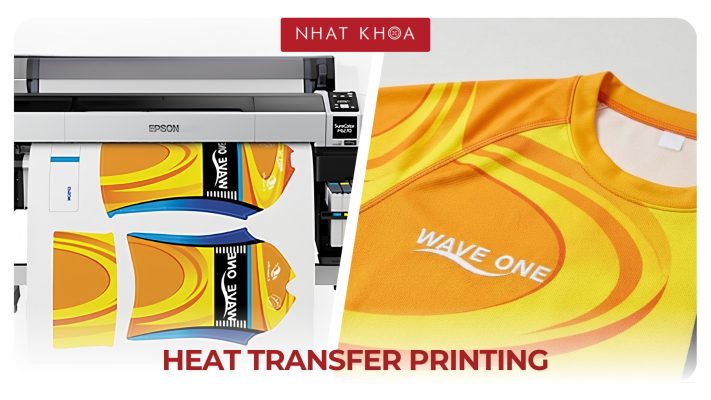
3.3. Heat Transfer Printing
Heat transfer printing uses high temperatures to transfer ink from specialized transfer paper onto the fabric surface. The ink bonds with the fibers, creating vivid and realistic images. This method includes several variations:
Dye Sublimation (AOP – All Over Printing): Uses high heat to transfer ink from specialized paper onto fabric. Ideal for all-over printing on polyester fabrics.
Vinyl/Decal Heat Transfer: Applies heat and pressure to transfer images from vinyl or decal materials onto fabric. Commonly used for logo printing, graphics, custom T-shirts, and small-batch uniform orders.
PET Heat Transfer (DTF – Direct to Film): Uses PET film to transfer ink onto fabric, allowing printing on a wide range of materials, from cotton to polyester.
Plastisol Heat Transfer (Screen Transfer): Uses Plastisol ink printed onto transfer paper and then applied to fabric using heat and pressure. This method is widely favored for large-volume production.
Advantages and Disadvantages of Heat Transfer Printing Techniques
|
Printing Technique |
Advantages |
Disadvantages |
|
Dye Sublimation (AOP – All Over Printing) |
|
|
|
Vinyl/Decal Heat Transfer |
|
|
|
PET Heat Transfer (DTF – Direct to Film) |
|
|
|
Plastisol Heat Transfer (Screen Transfer) |
|
|
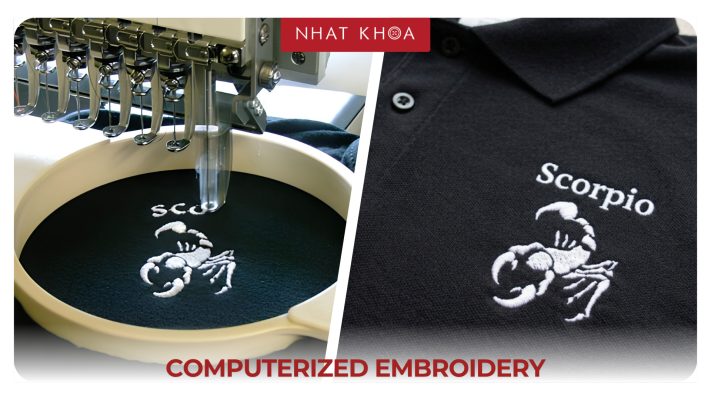
3.4. Embroidery
Embroidery is a technique that uses threads and embroidery machines to create logos or text on the fabric surface. Although it is a traditional method, embroidery remains highly favored thanks to its durability and elegant, premium appearance.
Advantages
- High durability.
- Colorfast, with no fading over time.
- Creates a refined and premium look when worn.
Disadvantages
- Not suitable for very small or highly intricate details.
- Generally higher in cost compared to printing methods.
- Large embroidery areas may feel slightly raised and cause mild discomfort; however, small embroidery designs typically do not create this issue.
Comparison of Advantages and Disadvantages of Each Printing Technique
To provide a clear and easy comparison, we have summarized the key advantages and disadvantages of each method in the table below.
5. Uniform Apron Size Chart at Nhất Khoa Uniform
To ensure proper fit and comfort, selecting the right apron size is essential. Nhất Khoa Uniform provides detailed size charts and also offers size customization based on customer requirements.

6. How to Care for Uniform Aprons
To keep uniform aprons durable and in good condition over time, please note the following care guidelines:
- Wash regularly: Aprons should be washed after each working day to remove stains and odors.
- Use suitable detergents: Avoid harsh detergents, as they may cause color fading and reduce fabric durability.
- Air dry naturally: For aprons made from natural fabrics, air drying under sunlight is recommended.
- Iron at appropriate temperatures: If ironing is needed, adjust the temperature according to the fabric type.
- Store in a dry place: When not in use, hang aprons in a dry, well-ventilated area.

7. Benefits of Providing Uniform Aprons for Employees
- Clothing protection: Aprons protect employees’ clothing from stains, grease, and food during work, especially in restaurants and cafés.
- Professional appearance: Uniform aprons create a neat, clean, and professional look, leaving a positive impression on customers.
- Brand image building: Aprons with printed or embroidered logos and brand information serve as an effective branding and promotional tool.
- Team consistency: Uniform aprons promote consistency and unity among staff, reflecting professionalism and teamwork.
- Enhanced hygiene: Aprons help maintain hygiene for both employees and the working environment, particularly in the food service industry.
- Convenience: Aprons often feature small pockets for tools, allowing staff to work more efficiently and conveniently.
8. Popular Uniform Apron Styles
Depending on usage needs and business style, various apron designs are available:
- Bib aprons: Cover the entire front body, with neck straps and waist ties.
- Waist aprons: Cover only the lower body, tied around the waist.
- Short aprons: Thigh-length or above-the-knee, suitable for service staff.
- Long aprons: Calf-length or ankle-length, suitable for kitchen staff.
- Aprons with pockets: Include pockets for carrying work tools.
- Aprons without pockets: Simple and streamlined design.
9. Applications of Uniform Aprons
Uniform aprons are widely used across various industries:
- Restaurants and cafés: Kitchen staff, servers, bartenders.
- Hotels: Housekeeping staff, laundry staff.
- Spas and hair salons: Beauty therapists, hairstylists.
- Supermarkets and retail stores: Sales staff, cashiers.
- Manufacturing workshops: Workers.
- Cooking classes: Students, chefs, assistant chefs.

10. Important Notes When Ordering Uniform Aprons
10.1. Clearly Define Your Needs
Before ordering uniform aprons, businesses should clearly define their purpose of use, target users, design requirements, colors, quantities, and sizes.
10.2. Choose Suitable Fabrics
Fabric selection determines durability, stain resistance, and comfort. Recommended options include Kaki fabric for its durability, thickness, and easy maintenance, or Cool Cotton fabric for its softness, moisture absorption, and breathability.
10.3. Ensure Design Requirements
Apron designs should ensure proper fit, comfort, high practicality, optional pockets if needed, and integration of brand identity elements.
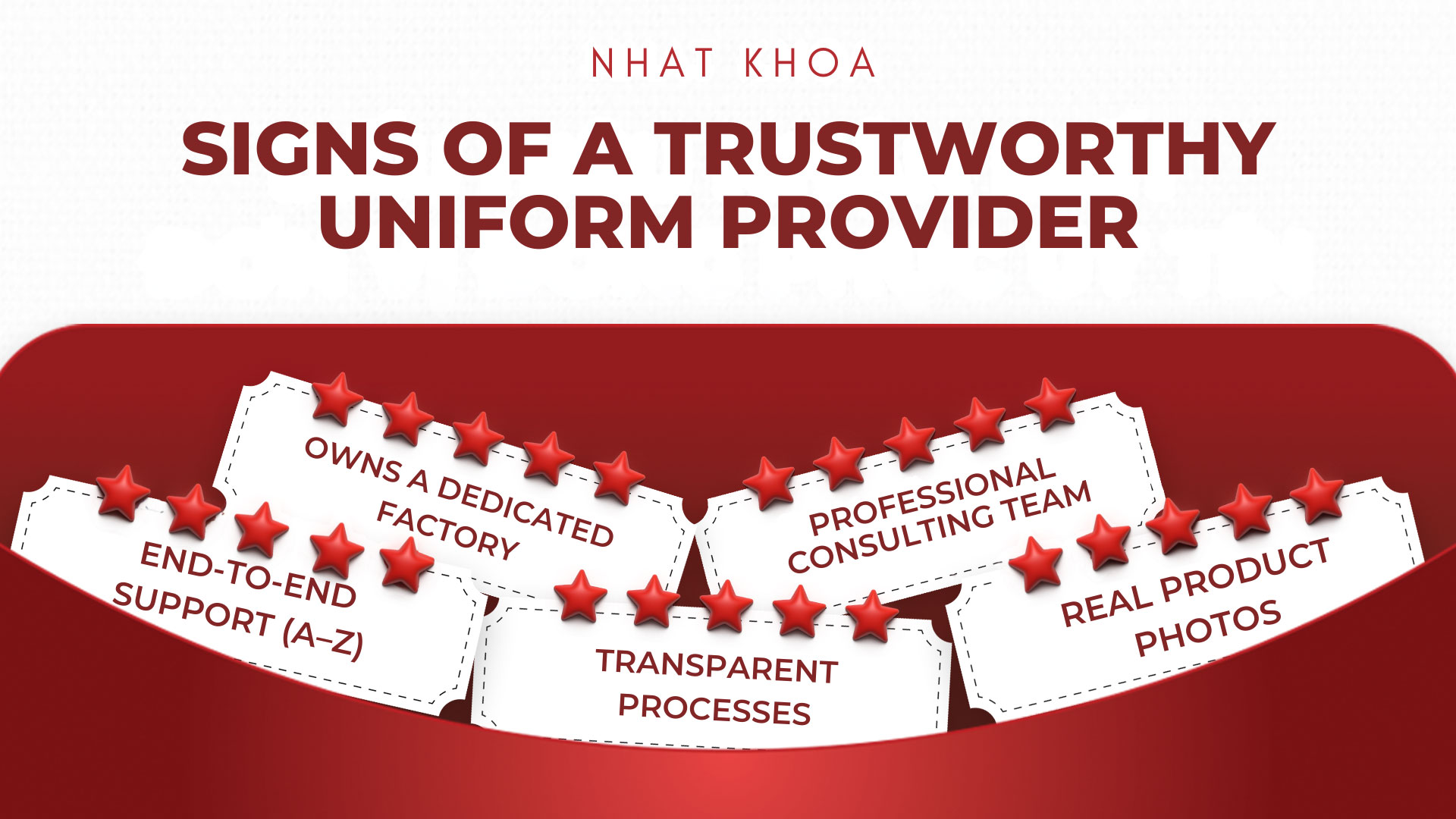
10.4. Select a Reputable Manufacturing Partner
To ensure final product quality, choosing a reputable tailoring workshop is essential. Businesses should look for manufacturers with proven experience, modern equipment, skilled workers, good customer service, and reasonable pricing.
11. Nhất Khoa – A Trusted Uniform Apron Manufacturer in Ho Chi Minh City
Nhất Khoa proudly brings over 20 years of experience in uniform manufacturing, particularly in uniform aprons. We have supplied aprons to businesses across various industries, from restaurants and cafés to spas and hair salons.
11.1. Experience and Reputation
With more than 20 years of experience, Nhất Khoa has built a strong reputation in the uniform manufacturing market. We are a trusted partner for businesses nationwide, delivering high-quality apron products that meet all customer requirements.
11.2. Professional Team
Nhất Khoa is supported by a team of designers and skilled tailors, each with at least 15 years of experience in uniform production. Our team has in-depth knowledge of fabrics and tailoring techniques while staying up to date with the latest design trends to deliver aprons that are both functional and stylish.
11.3. Free Consultation and Design
Understanding the importance of brand image and customer needs, Nhất Khoa offers free consultation and uniform apron design services. We carefully listen to your ideas and requirements to create unique designs tailored to your business.
11.4. Competitive Pricing
As a direct manufacturer without intermediaries, Nhất Khoa is committed to offering highly competitive pricing. We optimize production processes and source materials directly from reputable suppliers to minimize costs and maximize customer value.
11.5. Quality Assurance and On-Time Delivery
Nhất Khoa Uniform – Every product is carefully crafted with meticulous stitching.
Product quality and delivery timelines are top priorities at Nhất Khoa. We use premium fabrics with clear origins and maintain strict production control to ensure every uniform apron meets high-quality standards. At the same time, we are committed to delivering orders on time as agreed.
