

PRODUCT INFORMATION

2.1. Kaki Fabric
With reasonable cost and moderate stiffness, Kaki fabric delivers a neat and refined appearance. This material is durable and maintains its shape well, helping caps remain tidy and professional.
- High durability: Strong fiber structure, resistant to fraying, tearing, and color fading over time.
- Moderate stiffness: Helps caps retain shape while remaining comfortable to wear.
- Reasonable cost: Suitable for the budgets of many businesses.
- Easy maintenance: Easy to wash, quick-drying, and wrinkle-resistant.
- Color options: Wide and diverse color range.
- Breathable: Good airflow, preventing discomfort during prolonged wear.

2.2. Kaki 65/35 Fabric
The blend of cotton and polyester creates a soft and comfortable fabric that is pleasant to wear. Kaki 65/35 is not only durable but also wrinkle-resistant and easy to maintain.
- Soft and comfortable: Cotton content provides a gentle feel against the skin.
- High durability: Polyester fibers enhance strength and abrasion resistance.
- Wrinkle-resistant: Helps caps maintain a neat appearance.
- Good moisture absorption: Cotton absorbs sweat effectively, keeping the wearer dry and comfortable.
- Reasonable pricing: Suitable for a wide range of customers.
- Easy care: Simple to wash, quick-drying, and resistant to color fading.

2.3. 100% Cotton Kaki Fabric
Sharing similarities with Twill and Micro fabrics, this fabric still stands out thanks to its distinctive crosshatch texture, delivering a structured and premium appearance. It is commonly used for high-end jackets due to its excellent shape retention and refined aesthetics.
- Key advantages of this fabric include:
- Light textured surface that helps garments hold their shape and appear more premium.
- High durability and low wrinkling, suitable for long-term use.
- Quick-drying and easy to clean.
- Dust-resistant and effective in wind and sun protection, offering good outdoor coverage.
- Higher cost compared to standard outerwear fabrics, but well justified by its durability, aesthetics, and polished appearance.

3.1. Screen Printing
Screen printing is one of the most traditional and widely used printing techniques in the garment industry. This process involves using a mesh screen to transfer ink onto the fabric surface through a stencil that blocks non-printing areas.
Advantages
- High durability.
- Bright, vivid colors.
- Applicable to all fabric types.
- Cost-effective for large quantities.
Disadvantages
- Not suitable for designs requiring high detail, gradient colors, or ombre effects.
- For small order quantities, the cost may be higher compared to other printing methods.

3.2. DTG Printing (Direct to Garment)
DTG printing is a digital method that prints directly onto fabric using specialized inks that penetrate into the fibers, creating sharp and detailed images. DTG allows for complex, multi-color designs with no limitation on the number of colors.
Advantages
- Suitable for designs requiring high detail and accuracy with multiple colors.
- No limitation on the number of colors.
- Long-lasting color quality, delivering a premium appearance when worn.
- Compatible with various fabric types and surfaces, including cotton.
Disadvantages: Due to the high level of image sharpness and detail, the cost is higher compared to other printing methods.

3.3. Heat Transfer Printing
Heat transfer printing uses high temperatures to transfer ink from specialized transfer paper onto the fabric surface. The ink bonds with the fibers, creating vivid and realistic images. Heat transfer printing includes several variations:
- Dye Sublimation (AOP – All Over Printing): Uses high heat to transfer ink from specialized paper onto fabric. This method is ideal for all-over printing on polyester fabrics.
- Vinyl/Decal Heat Transfer: Uses heat and pressure to transfer images from vinyl or decal materials onto fabric. This method is commonly used for logo printing and graphic printing, and is widely applied in custom T-shirt production and small-quantity uniform orders.
- PET Heat Transfer (DTF – Direct to Film): Uses PET film to transfer ink onto fabric, allowing printing on a wide range of materials, from cotton to polyester.
- Plastisol Heat Transfer (Screen Transfer): Uses Plastisol ink printed onto transfer paper and then transferred onto fabric using heat and pressure. This method is widely preferred for large-volume printing.
Advantages and Disadvantages of Heat Transfer Printing Techniques
|
Printing Technique |
Advantages |
Disadvantages |
|
Dye Sublimation (AOP – All Over Printing) |
|
|
|
Vinyl/Decal Heat Transfer |
|
|
|
PET Heat Transfer (DTF – Direct to Film) |
|
|
|
Plastisol Heat Transfer (Screen Transfer) |
|
|

3.4. Embroidery
Embroidery is a technique that uses threads and embroidery machines to create logos or text on the fabric surface. Although it is a traditional method, embroidery remains highly preferred thanks to its durability and elegant, premium appearance.
Advantages
- High durability.
- Colorfast, with no fading over time.
- Creates a premium and refined look when worn.
Disadvantages
- Not suitable for very small or highly intricate details.
- Generally higher in cost compared to printing methods.
- Large embroidery areas may feel slightly raised and cause slight discomfort; however, small embroidery designs typically do not create this issue.
Comparison of Advantages and Disadvantages of Each Printing
Technique
To help provide a clear and easy comparison, we have summarized the advantages and disadvantages of each method in the table below.
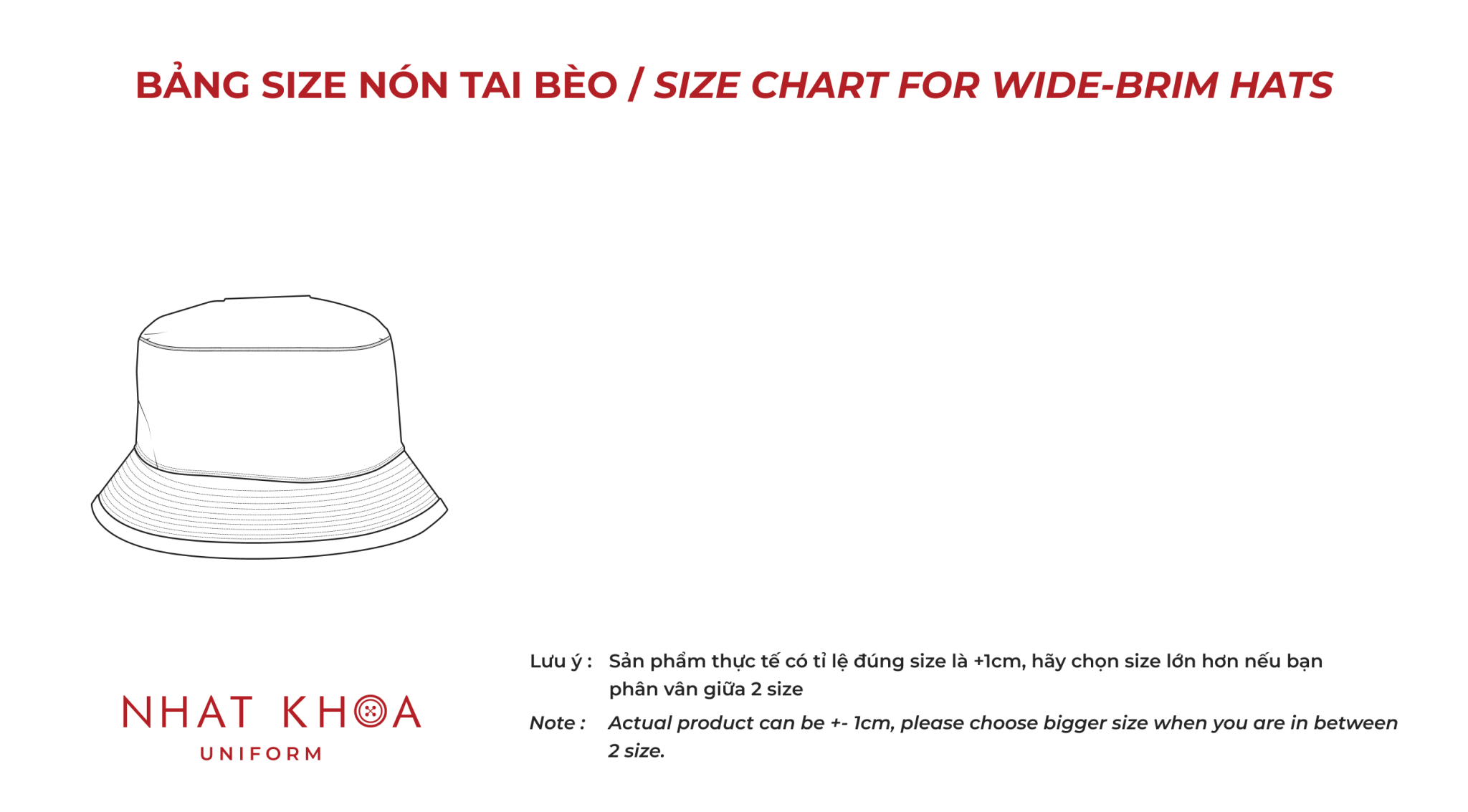
5. Uniform Cap Size Chart at Nhất Khoa Uniform
Nhất Khoa Uniform provides uniform caps in various sizes to fit different head circumferences. We also offer size adjustments upon request to ensure optimal fit and maximum comfort.
6. How to Care for Uniform Caps
To keep uniform caps durable and in good condition over time, please follow these care guidelines:
- Proper washing: Hand wash caps with cold water and mild soap. Avoid strong detergents or excessive scrubbing.
- Air dry naturally: Dry caps in a well-ventilated area and avoid direct sunlight to preserve color and shape.
- Avoid folding caps: Hang caps or place them on a flat surface to maintain their form.
- Store in a dry place: Keep caps in a dry, airy environment when not in use to prevent moisture damage.
- Clean regularly: Clean caps frequently to remove dust, sweat, and bacteria.

7. Benefits of Using Uniform Caps
Providing uniform caps offers practical benefits while contributing to corporate image and culture. Key advantages include:
- Protection from weather conditions such as sun and rain.
- Enhanced professionalism and uniformity.
- Cost-effective and efficient brand promotion.
- Improved brand recognition.
- Fashionable accessory that adds a finishing touch to uniforms.
- Suitable as meaningful gifts for employees, customers, and partners.
- Helps strengthen team spirit and cohesion.

8. Popular Uniform Cap Styles
Depending on business needs, style preferences, and budget, various uniform cap designs are available:
- Baseball caps: Popular, youthful, and dynamic; suitable for many user groups and work environments.
- Bucket hats: Wide brims provide effective sun protection; ideal for outdoor workers.
- Snapback caps: Hip-hop-inspired, bold style often favored by younger audiences.
- Visor caps: Open-top design offering breathability; suitable for sports activities.
- Safety caps: Equipped with additional protective features for workers in high-risk industries.
9. Applications of Uniform Caps
Uniform caps are widely used across many sectors:
- Companies and businesses: Office staff, sales staff, delivery personnel.
- Restaurants, hotels, cafés: Service staff, chefs, bartenders.
- Events: Event staff, volunteers.
- Sports: Athletes, coaches, supporters.
- Tourism: Tour guides, travel company staff.
- Schools: Students in extracurricular and sports activities.
- Construction: Construction workers, engineers.
10. Important Notes When Ordering Uniform Caps
10.1. Clearly Define Your Needs
Before placing an order, businesses should prepare carefully and clearly define key factors. First, determine the primary purpose of the uniform caps to guide decisions on design, materials, and quantity.
Next, identify the target users, as different groups have varying preferences for style, color, and fabric. Finally, determine the required quantity and budget per cap. This helps in selecting suitable materials, printing/embroidery methods, and manufacturing partners.
10.2. Choose Suitable Materials
Fabric selection plays a crucial role in durability, breathability, aesthetics, and cost. Businesses should carefully consider material options while taking into account weather conditions, work environment, and job characteristics.
10.3. Ensure Design Requirements
Uniform cap designs should not only be visually appealing but also functional and aligned with brand identity:
- Style: Choose cap styles suitable for the target users and usage purpose (baseball caps, bucket hats, snapbacks, etc.).
- Color: Select colors that harmonize with the uniform set and brand colors.
- Logo and messaging: Ensure logos and messages are clear, sharp, recognizable, and effectively convey brand values.
- Size: Caps should be adjustable to fit a wide range of users comfortably.
- Additional details: Features such as brims, ventilation holes, and adjustment straps can enhance both functionality and aesthetics.
10.4. Select a Reputable Manufacturing Partner
To ensure product quality and timely delivery, businesses should choose experienced and reputable uniform cap manufacturers. Consider the following factors when selecting a partner:
- Experience: Prioritize manufacturers with extensive experience in uniform production, especially caps.
- Production capacity: Ensure the factory has adequate equipment, machinery, and workforce to meet order requirements.
- Product quality: Request fabric samples and cap samples for quality inspection before ordering.
- Customer service: Choose partners with professional, responsive consulting teams.
- Pricing: Compare prices from multiple manufacturers to find competitive and reasonable options.
- Delivery timeline: Clearly agree on delivery schedules and related terms.
11. Nhất Khoa – A Trusted Uniform Cap Manufacturer in Ho Chi Minh City
Nhất Khoa proudly brings over 20 years of experience in uniform manufacturing, particularly in uniform caps. We have supplied caps to businesses across various industries, from large corporations and groups to small shops.
11.1. Experience and Reputation
With more than two decades of experience, Nhất Khoa has built a solid reputation in the uniform manufacturing market. We are a trusted partner for many businesses, delivering high-quality caps that meet all customer requirements.
11.2. Professional Team
Nhất Khoa is supported by a team of designers and skilled tailors with at least 15 years of experience. Our team has deep expertise in fabrics, tailoring, and printing techniques, while continuously updating the latest design trends to deliver caps that are both practical and fashionable.
11.3. Free Consultation and Design
Understanding the importance of brand image and customer needs, Nhất Khoa offers free consultation and uniform cap design services. We listen carefully to your ideas and requirements to create unique designs that reflect your business identity.
11.4. Competitive Pricing
As a direct manufacturer with no intermediaries, Nhất Khoa is committed to offering highly competitive prices. We optimize production processes and source materials directly from reputable suppliers to minimize costs and maximize customer value.
11.5. Quality Assurance and On-Time Delivery
Product quality and delivery timelines are top priorities at Nhất Khoa. We use premium fabrics with clear origins and maintain strict quality control throughout production to ensure every uniform cap meets high standards. At the same time, we are committed to delivering orders on schedule as agreed.