

PRODUCT INFORMATION
1. Nhat Khoa – Supplier Reputable Uniform Jackets
Uniform jackets are not just warm clothing; they are also an important part of building a professional image and fostering team cohesion for businesses and organizations. Unlike t-shirts or shirts, jackets are typically used in colder weather conditions or during outdoor activities, providing protection and comfort for the wearer.
In the workplace, uniform jackets help create a sense of uniformity and professionalism. Simultaneously, with the company logo and colors, the jacket becomes an effective brand promotion tool. In events and team-building activities, uniform jackets not only help keep warm but also foster a sense of unity and camaraderie among members.
At Nhat Khoa, we understand the importance of uniform jackets. With many years of experience in the garment industry, we are proud to offer high-quality uniform jackets in a variety of styles and materials to meet all customer needs.
2. A Compilation of Materials for Making Jackets
Choosing the right fabric is a key factor in determining the quality, durability, and aesthetics of uniform jackets. Each type of fabric has its own characteristics, suitable for different uses. Below are some common fabrics used to make uniform jackets at Nhat Khoa:

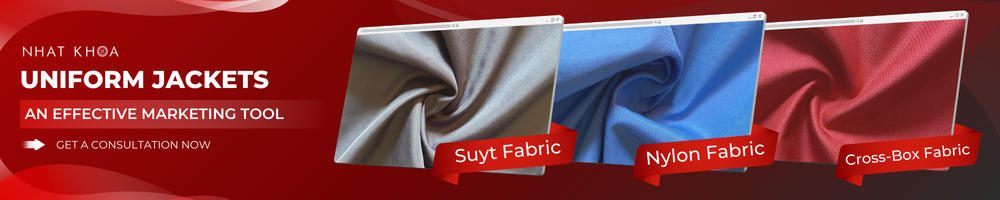
2.1. Squid Fabric
With its lightweight and soft texture, Suýt fabric provides optimal comfort and a pleasant feel for the wearer. Thanks to its reasonable price and high versatility, it is one of the most commonly used fabrics today in uniforms and outdoor clothing.
Some notable characteristics of Suýt fabric include:
- The smooth, glossy surface creates a sophisticated and elegant feel.
- The fabric is thin and lightweight, keeping the body feeling comfortable and at ease when worn.
- It wrinkles less, maintains its shape well, and is convenient to use and store.
- It offers good wind and sun protection, making it suitable for outdoor activities.
- It makes a slight noise when moved, but this is characteristic of this material.
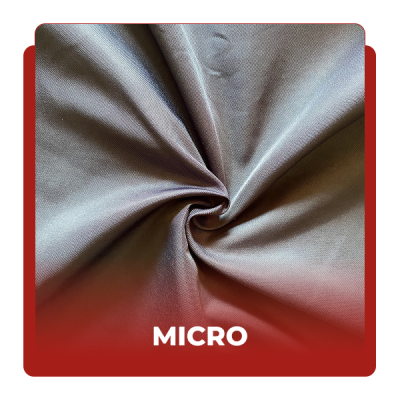
2.2. Microfiber Fabric
Known for its high durability and smooth surface, microfiber fabric is an ideal choice for outdoor uniforms. With its tightly woven structure, this fabric not only effectively repels dust and wind but also maintains its shape and new look even after prolonged use.
The outstanding characteristics of Micro fabric include:
- Dries quickly after washing, making regular cleaning convenient.
- Highly durable, wrinkle-resistant, and keeps clothes looking neat and tidy.
- It has good dust resistance, making it suitable for outdoor work environments or those involving a lot of movement.
- It offers good wind and sun protection, shielding the wearer from harsh weather conditions.
- The smooth, glossy surface creates a modern and dynamic feel.

2.3. Twill Fabric
While sharing many similarities with Szechuan and Microfiber fabrics, twill fabric still makes its own mark thanks to its distinctive checkered pattern, giving garments a luxurious and sturdy appearance. This material is often chosen for high-end coats due to its excellent shape retention and high aesthetic appeal.
Some notable advantages of twill fabric include:
- The surface has a subtle texture, which helps the shirt maintain its shape and creates a more premium feel.
- Highly durable, wrinkle-resistant, and suitable for long-term use.
- Quick-drying capability, convenient for cleaning.
- It effectively repels dust, protects against wind and sun, and provides good protection for the wearer in outdoor conditions.
- While more expensive than common jacket fabrics, it’s entirely worth the durability, aesthetics, and polished look it provides.

4.1. Screen Printing
Screen printing is one of the oldest and most popular printing methods in the garment industry. This technique uses a specialized mesh stencil to press ink through a barrier, ensuring even ink adhesion to the fabric surface. Due to its unique structure, screen printing is often used for large-scale production requiring high durability and vibrant colors.
Advantage
- The printed colors are sharp and durable over time.
- The production cost is reasonable if printing in large quantities.
- Suitable for most types of fabrics.
- The color effect is vibrant and clear on the fabric.
Disadvantages
- Not suitable for images with fine details, gradient colors, or complex color combinations.
- If you only need to print a small quantity, the cost will be higher compared to other printing techniques.

4.2. DTG (Direct to Garment)
DTG printing is a technology that prints directly onto fabric using a machine.digital printingThis technology allows ink to penetrate deep into each fabric fiber instead of just sitting on the surface. As a result, the images produced have very high sharpness and detail. This is an ideal choice for complex, multi-colored designs with unlimited tonal range. This technology offers maximum flexibility, especially suitable for printing small quantities while still ensuring image quality.
Advantage
- It allows for the accurate representation of highly detailed designs and complex color schemes.
- There are no limitations on the number of colors that can be printed.
- The printed colors adhere firmly to the fabric fibers, creating a luxurious and high-end feel when worn.
- Easily applied to a variety of materials, including cotton and other soft fabric surfaces.
Disadvantages: The cost is usually higher compared to other printing techniques due to the requirements for accuracy and image quality.
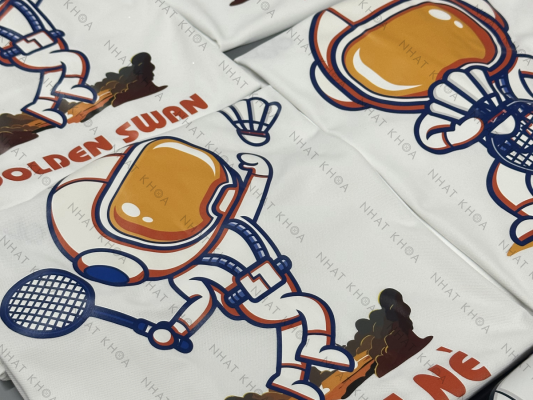
4.3. Heat Transfer Printing
Heat transfer printing is a technique that uses high temperatures to press ink from specialized printing paper onto the surface of fabric. Under the effect of heat, the ink penetrates deep into the fabric fibers, creating sharp, vivid images with high colorfastness. This technology not only produces beautiful prints but is also versatile with many different materials and printing methods, suitable for both small-scale and large-scale production.
- Dye Sublimation (AOP – All Over Printing): This method allows for full-surface printing on the garment, resulting in vibrant and seamless images. The technique uses heat to transfer ink from paper to fabric, and is particularly effective on polyester. Dye sublimation is ideal for designs requiring large print areas, such as sportswear, team shirts, or event uniforms.
- Heat Transfer Decal/Vinyl: With this method, the image is pre-cut on decal or vinyl, then heat-pressed onto the fabric. This is a popular choice for printing logos, slogans, or small details, suitable for custom orders or small quantities. Decal printing stands out for its sharpness and versatility in printing materials.
- PET Heat Transfer (DTF – Direct to Film: DTF (Digital T-Shirt Printing) is a modern printing technology that uses PET film to transfer ink onto the fabric surface. This technique allows printing on a variety of materials, from cotton and polyester to blended fabrics, while also reproducing highly detailed designs. It’s a flexible solution for businesses that need to print many different types of shirts with various materials.
Plastisol Heat Transfer (Silk Heat Transfer): This method utilizes Plastisol ink – a type of ink commonly used in industrial printing – to create sharp images with high adhesion. The ink is printed onto paper and then pressed onto the fabric using heat and pressure. Plastisol is suitable for large-scale production, resulting in evenly colored, sharp images with good durability even after multiple washes.
Advantages and disadvantages of heat transfer printing techniques:
|
Printing technique |
Advantage |
Disadvantages |
|
Dye Sublimation (AOP – All Over Printing) |
|
|
|
Heat Transfer Decal/Vinyl |
|
More suitable for small quantity or individual orders. |
|
PET Heat Transfer (DTF – Direct to Film) |
|
The durability of printed images is not as high as with other printing methods. |
|
Plastisol Heat Transfer (Silk Heat Transfer) |
|
|

4.4. Embroidery
Embroidery is one of the oldest traditional decorative methods in the garment industry. Using specialized threads and industrial embroidery machines, patterns or letters are created directly on the fabric surface. Despite the passage of time, embroidery has maintained its unique position thanks to its elegant appearance and superior durability.
Advantage
- They are very durable and remain virtually unaffected by repeated washing.
- The thread color is resistant to fading, maintaining its sharpness and sophistication for a long time.
- The embroidery is exquisite and has a certain raised quality, creating a high-end feel when worn.
- Suitable for uniform designs that need to project a professional and polished image.
Disadvantages
- It is not suitable for designs with very small details or overly complex colors.
- Production costs are high compared to printing methods, especially for designs with large embroidery areas.
- Overly large embroidery can feel slightly bulky when worn. However, if handled delicately or placed in a compact location, this feeling is almost negligible.
Compare the advantages and disadvantages of each printing technique.
|
Printing techniques |
Advantage |
Disadvantages |
|
Silk screen printing |
|
|
|
Heat transfer printing |
|
|
|
Digital printing (DTG) |
|
|
|
Embroidery |
|
|
5. Uniform Jacket Color Chart at Nhat Khoa
Color plays a crucial role in expressing a brand’s identity and message. Nhat Khoa offers a diverse color palette for uniform jackets, ranging from elegant, neutral shades like black, white, gray, and navy blue, to bright, vibrant colors like red, yellow, orange, and green.
Customers are free to choose colors that match their logo, brand identity, and personal preferences. In addition,Nhat KhoaWe can also customize the colors according to the customer’s specific requirements, ensuring uniqueness and distinctiveness for the uniform.
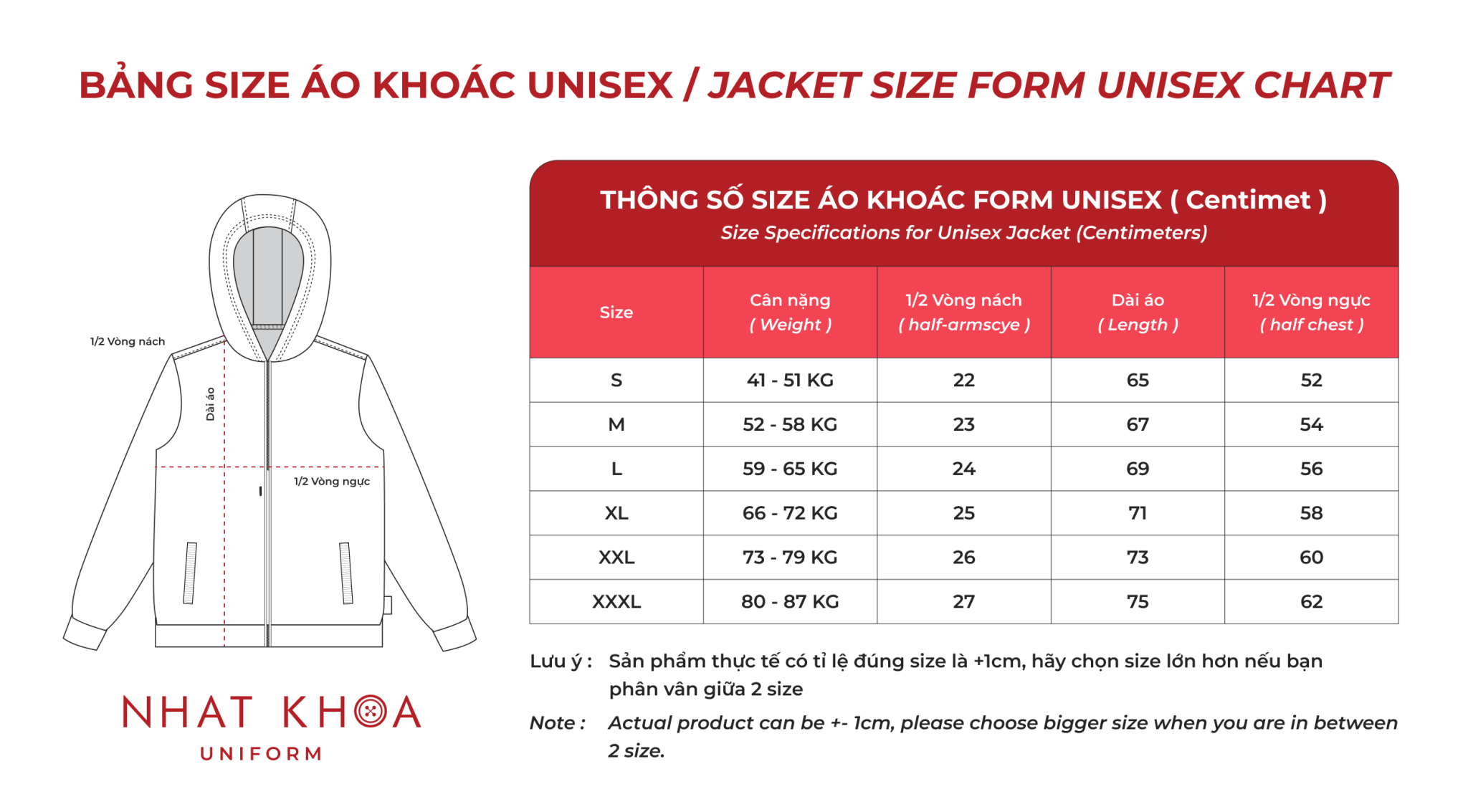
6. Uniform Jacket Size Chart
To ensure uniform jackets fit and are comfortable for all employees, choosing the correct size is crucial. Nhat Khoa provides a detailed uniform jacket size chart, with sizes ranging from XS to 5X, suitable for all body types and customer needs.
8. Instructions for Caring for Uniform Jackets
To keep your uniform jacket looking its best, proper washing, drying, ironing, and storage are crucial. Here are some simple guidelines to help extend its lifespan:
When washing a jacket
Hand washing is preferred, or if using a washing machine, use a gentle cycle to reduce friction and avoid damaging the fabric. Use cold or warm water below 30°C, combined with a mild detergent or neutral soap, and avoid using harsh bleach.
Before washing, turn the garment inside out to protect the print/embroidery. Also, avoid soaking the garment for too long and wash it separately to prevent color fading or staining from other clothes.
When drying clothes
Choose a well-ventilated area, avoiding direct sunlight to keep the colors of the shirt vibrant. Hang the shirt inside out to dry and absolutely do not use a dryer, as high temperatures can shrink the fabric or damage the print/embroidery.
When ironing
Only iron when absolutely necessary. Turn the garment inside out before ironing and use a low temperature to avoid distorting the fabric. In particular, do not iron directly over printed or embroidered areas to prevent peeling or damage.
When storing
Hang your coat on a hanger and store it in a dry, well-ventilated place. Avoid storing it in damp areas or in direct sunlight. You can also use desiccant packets in your wardrobe to help preserve your coat better during humid seasons or weather.
- Fabrics like twill, microfiber, or twill are easy to wash and dry quickly; however, avoid vigorous scrubbing or rubbing to minimize wrinkling or pilling.
- Felt fabric requires more careful handling; it should be gently hand-washed and dried in the shade to maintain its softness and prevent pilling.
By properly caring for your uniform jackets, from washing to storage, you can keep them looking good and lasting a long time without worrying about them losing their shape or fading.

10. Applications of Uniform Jackets in Various Fields
Uniform jackets, with their versatility and variety, have become an indispensable part of many different fields and industries. Here are some typical examples:
- Businesses: In the workplace, uniform jackets not only create a professional and cohesive look but also help promote the brand. Companies often choose windbreakers, fleece jackets, or bomber jackets for their employees.
- Event: At events, conferences, and seminars, uniform jackets help organizers, support staff, and volunteers be easily identified. Uniform jackets can also be used as gifts for attendees.
- Schools: Many schools, especially middle schools, high schools, and universities, use uniform jackets for students to create unity, discipline, and build the school’s image.
- Team: Clubs, sports teams, volunteer groups, etc., often use uniform jackets to express team spirit, unity, and create a unique identity.
- Restaurants, hotels: Waiters, receptionists, chefs, and other staff in restaurants and hotels often wear uniform jackets to project a professional, polite image and make themselves easily recognizable.
- Worker: In factories, workshops, and construction sites, uniform jackets (usually protective jackets) not only help protect workers from the elements but also ensure workplace safety.
In addition, uniform jackets are used in many other fields such as healthcare, aviation, and the military. Depending on the specifics of each profession, the uniform jacket will have a suitable design, material, and color.
11. Things to Note When Ordering Custom-Made Uniform Jackets
11.1. Choose the right fabric material.
When ordering custom-made uniform jackets, choosing the right material and style is crucial, determining durability, comfort, and overall aesthetic value. The material needs to meet the working environment and climate conditions—from offices and construction sites to production areas—while also ensuring breathability and maximum comfort for the wearer.
In addition, the jacket must ensure flexibility, support natural movement, and not hinder work. The design should harmonize with job requirements and brand image, helping employees maintain a confident, professional, and comfortable demeanor throughout their workday.
11.2. Choosing a design that is compatible with the brand.
When choosing uniform jackets, you need to consider branding to ensure the uniforms accurately reflect the company’s culture and image. The jacket colors should be consistent with the logo or brand colors, creating a strong and easily recognizable connection.
The style and design of the jackets should ensure a professional look, making employees appear neat and energetic. Choosing uniform jackets that match the brand also shows respect for customers and enhances the company’s reputation.
11.3. Choose a professional and reputable garment factory.
The garment factory is a key factor determining the quality of uniform products. To ensure superior value and durability of jackets, businesses should collaborate with reputable, experienced, and professional suppliers. This helps ensure that the product accurately meets requirements regarding design, materials, reasonable cost, and delivery schedule.
Reliable partners not only commit to quality but also have the capacity to flexibly meet demands in terms of quantity, design, and production time. Choosing the right supplier helps businesses optimize time, effort and resources, while ensuring that every product meets the highest quality standards.
12. Suggested Addresses for Quality Uniform Jacket Tailoring in Ho Chi Minh City
If you are looking for a reputable and high-quality uniform jacket tailoring service in Ho Chi Minh City, Nhat Khoa is a reliable choice. With many years of experience in the garment industry, Nhat Khoa has established itself as one of the leading companies, trusted and chosen by many businesses and organizations.
12.1. Extensive experience in the garment industry.
Nhat Khoa proudly boasts over 20 years of experience in the garment industry, especially in uniform manufacturing. With this wealth of experience, we possess a deep understanding of fabrics, sewing techniques, fashion trends, and the needs and desires of our customers.
12.2. Skilled staff
Nhat Khoa boasts a team of creative designers and skilled tailors who are experienced and dedicated to their work. Our staff constantly learns and updates themselves with the latest trends to provide customers with high-quality uniforms that are aesthetically pleasing and suitable for each industry.
12.3. Free custom design
Understanding that every business has its own unique identity and story, Nhat Khoa offers a free custom uniform jacket design service. We will listen to your ideas and desires, then advise and design unique and impressive uniform jackets that clearly reflect your brand and corporate culture.
12.4. Factory direct pricing
As a direct garment factory, without any intermediaries, Nhat Khoa is committed to providing customers with the most competitive, factory-direct prices on the market. This allows you to significantly save on uniform manufacturing costs while still ensuring the highest product quality.