



PRODUCT INFORMATION
1. Nhat Khoa – A Reputable Supplier of Uniform Raincoats
Uniform raincoats are essential for many businesses, especially those with employees who frequently work outdoors, travel extensively, or work in fields such as delivery, construction, and tourism. Raincoats not only protect employees from getting wet and maintain their health but also demonstrate the company’s concern for its workers.
Equipping employees with high-quality uniform raincoats, printed or embroidered with company logos and information, helps businesses effectively promote their brand and create a positive impression on customers and partners. Uniform raincoats also contribute to building a professional, unified, and cohesive image within the team
At Nhat Khoa, we are proud to offer high-quality uniform raincoats in a variety of styles, materials, and colors to meet the needs of all businesses. With 20 years of experience, Nhat Khoa has established itself as one of the leading uniform suppliers, providing the best products at competitive prices.
2. Fabric Materials Used for Making Uniform Raincoats at Nhat Khoa
PVC (Polyvinyl Chloride) is a synthetic fabric made from knitted polyester fibers, coated with a layer of PVC plastic to enhance its water resistance. It is currently the most popular and widely used material for making raincoats.

2.1. PVC fabric
PVC (Polyvinyl Chloride) is a synthetic fabric made from knitted polyester fibers, coated with a layer of PVC plastic to enhance its water resistance. It is currently the most popular and widely used material for making raincoats.
PVC fabric has the following outstanding characteristics:
- Completely waterproof: The PVC layer prevents rainwater from seeping through the fabric, keeping the wearer dry.
- High durability: PVC fabric is highly durable, resistant to weather conditions, and less prone to tearing or puncturing.
- Reasonable price: Compared to other waterproof fabrics, PVC fabric is relatively inexpensive, making it suitable for a wide range of customers.
- Easy to clean: The PVC fabric surface is smooth, does not attract dirt, and is easy to wipe clean.

2.2. Canvas
Nylon fabric is a higher-quality fabric than PVC, made from two or more synthetic fibers such as cotton, polyester, or rayon. Nylon fabric has good water resistance, while also offering greater beauty and durability.
The advantages of parachute fabric include:
- Good waterproofing: Parachute fabric has good water-repellent properties, protecting the wearer from getting wet in the rain.
- High durability: Parachute fabric is highly durable and resistant to fading and stretching even after prolonged use.
- Airy: Parachute fabric is more breathable than PVC, providing a more comfortable feel for the wearer.
Elegant, fashionable: Raincoats made from parachute fabric have a more attractive and luxurious appearance compared to PVC raincoats.

2.3. Honeycomb Fabric
Honeycomb parachute fabric is a special type of parachute fabric made from synthetic fibers, with a surface structure resembling a honeycomb. This fabric is wrinkle-resistant, lightweight, soft, and especially offers superior water resistance.
Honeycomb canvas fabric offers the following benefits:
- Completely waterproof: The honeycomb structure enhances the fabric’s water-repellent properties.
- Lightweight, soft: Honeycomb parachute fabric is very lightweight, providing a comfortable wearing experience.
- Anti-wrinkle: Honeycomb fabric is less prone to wrinkling, keeping the raincoat wrinkle-free.
High durability: Honeycomb parachute fabric is highly durable and resistant to damage over time.
Comparison table of fabrics used for polo shirts
3. Several methods for printing/embroidering logos onto uniform raincoats.

3.1. Screen Printing
Screen printing is one of the most popular and oldest printing techniques in the garment industry. The screen printing process involves using a mesh screen to transfer ink onto the fabric surface through an ink-repellent barrier.
Advantage
- High durability.
- Bright colors.
- It can be printed on any type of fabric.
- Low cost for large quantities.
Disadvantages
- Not suitable for designs requiring high detail, using blue colors, or ombre effects.
- If customers print in small quantities, the price may be higher compared to other printing options.

3.2. In DTG (Direct to Garment)
DTG printing is a method of printing directly onto clothing using a machine digital printer. This technique uses specialized inks that penetrate directly into the fabric fibers, creating sharp and detailed images. DTG printing allows for the printing of complex, multi-colored images with no limit on the number of colors.
Advantage
- It can print images requiring high detail and accuracy, in multiple colors.
- There is no limit to the number of colors.
- The shirt is colorfast and looks very elegant when worn.
- Suitable for a wide variety of fabrics, with no limitations and capable of printing on many different surfaces, including cotton.
Disadvantages: Because the printed images are very sharp, the price is higher compared to other printing methods.
3.3. Heat Transfer Printing
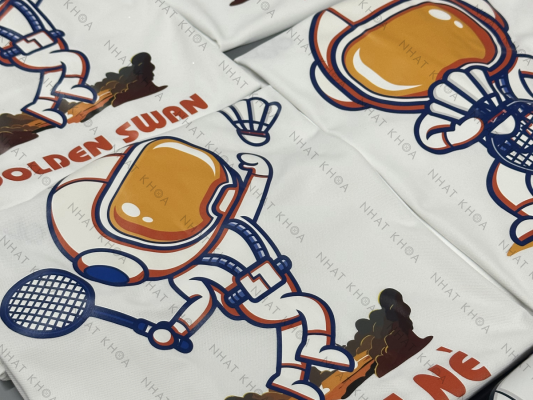
Heat transfer printing is a process that uses high temperatures to transfer ink from specialized printing paper onto the surface of fabric. The ink blends into the fabric fibers, creating realistic and vibrant images. Heat transfer printing is divided into several different types:
- Dye Sublimation (AOP – All Over Printing): This printing technique uses high temperatures to transfer ink from specialized printing paper onto the fabric material. This method is ideal for full-body printing on polyester fabrics.
- Heat Transfer Decal/Vinyl: This technique uses heat and pressure to transfer images from decals/vinyl onto fabric. It’s popular for logo and image printing and is widely used in the production of custom t-shirts and small-quantity uniforms.
- PET Heat Transfer (DTF – Direct to Film): This printing technique uses PET film to transfer ink onto fabric. This method allows printing on a wide variety of fabrics, from cotton to polyester.
Plastisol Heat Transfer (Silk Heat Transfer): This technique uses plastisol ink to print onto paper and then transfers it onto fabric using heat and pressure. This method is preferred for large-scale printing.
Advantages and disadvantages of heat transfer printing techniques
|
Printing technique |
Advantage |
Disadvantages |
|
Dye Sublimation (AOP – All Over Printing) |
|
|
|
Heat Transfer Decal/Vinyl |
|
Suitable for small quantity orders. |
|
PET Heat Transfer (DTF – Direct to Film) |
|
The product’s durability is not as good as other printing techniques. |
|
Plastisol Heat Transfer (Silk Heat Transfer) |
|
|

3.4. Embroidery
Embroidery is a technique that uses thread and an embroidery machine to create images or letters on the surface of fabric. It is a traditional method but remains popular due to its durability and elegant appearance.
Advantage
- High durability
- Non-fading
- Creates a luxurious feel when worn.
Disadvantages
- It’s not possible to embroider small details.
- Generally, embroidery costs more than printing.
- Large embroidered areas on a garment can feel slightly bulky and potentially uncomfortable. However, smaller embroidery usually doesn’t cause this discomfort.
Compare the advantages and disadvantages of each printing technique.
To help you visualize and easily compare the techniques, we have compiled the advantages and disadvantages of each method in the table below:
|
Printing techniques |
Advantage |
Disadvantages |
|
Silk screen printing |
Inexpensive for bulk printing, vibrant and durable colors. |
It’s not possible to print complex, multi-colored images, and the printing plate preparation time is long. |
|
In decal |
We can print detailed, multi-color images, even in small quantities. |
The durability is low, it peels easily, and the printed surface is stiff. |
|
Heat transfer printing |
Available in a variety of colors, with good adhesion to many types of fabrics and surfaces. |
It can only be printed on polyester fabric, is expensive, and the printed image may not be perfectly sharp. |
|
Digital printing (DTG) |
It produces detailed and vibrant images with high colorfastness, looks luxurious when worn, and is suitable for many types of fabrics and surfaces, including cotton. |
High cost, colorfastness depends on the ink and fabric. |
|
Embroidery |
Highly durable, with a luxurious and classy appearance that won’t fade. |
High cost, unsuitable for printing complex, multi-color images, and long processing time. |
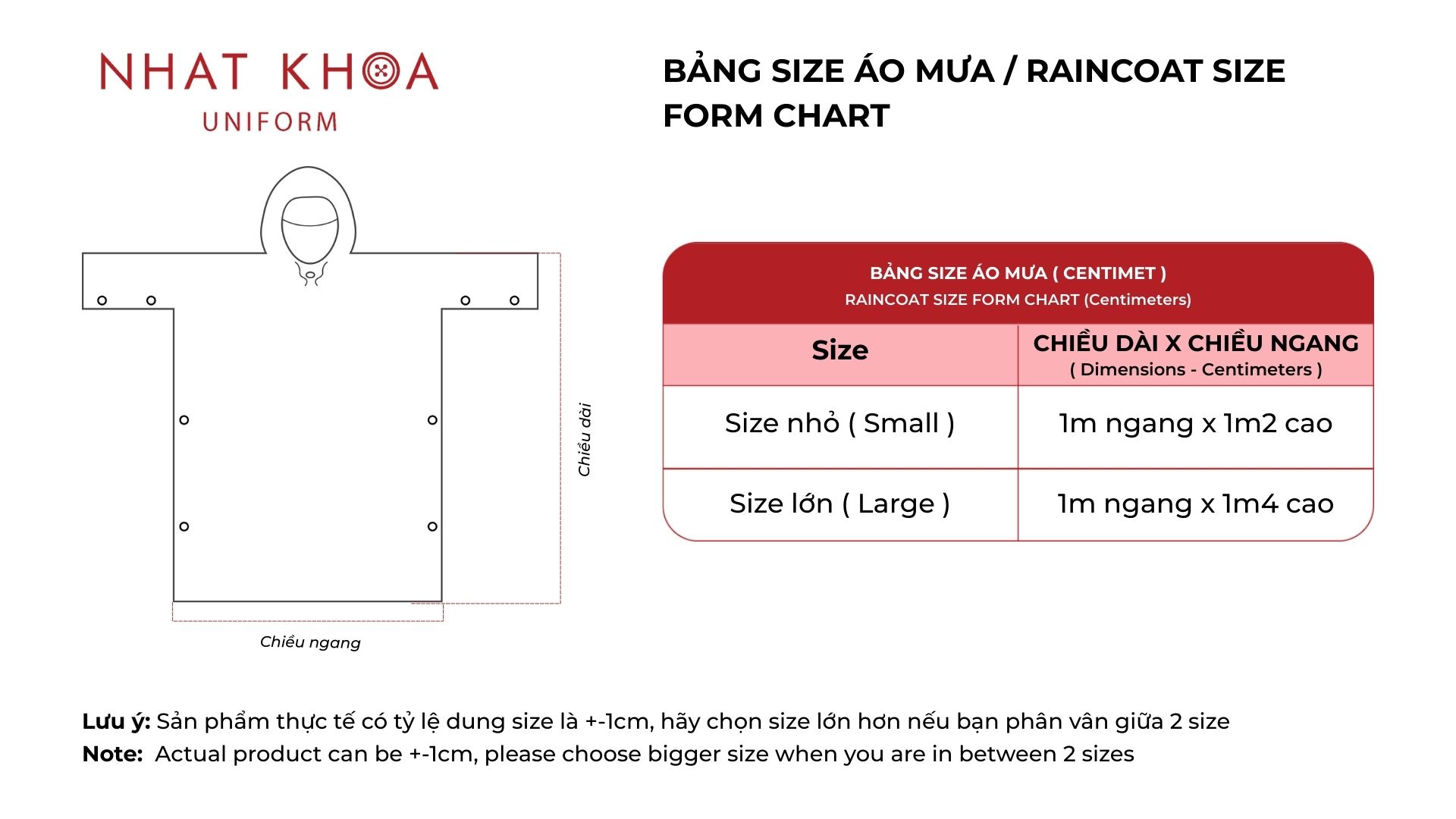
5. Raincoat Uniform Size Chart at Nhat Khoa Uniform
To ensure a comfortable and well-fitting raincoat that provides maximum protection, choosing the right size is crucial. Nhat Khoa Uniform provides a detailed size chart suitable for various body types. Customers can refer to the size chart or contact us via hotline 082 345 1195 for further advice.
7. How to Store Uniform Raincoats
To ensure your uniform raincoats remain durable, look good, and last a long time, please note the following points:
- Wash/wipe clean after use: After being out in the rain, you should wash or wipe your raincoat clean to remove dirt, rainwater, and other contaminants.
- Air dry naturally: Raincoats should be air-dried in a cool, well-ventilated place, away from direct sunlight, to preserve the color and durability of the fabric. Do not tumble-dry or iron raincoats at high temperatures.
- Avoid folding your raincoat while it’s still damp: When raincoats are still damp, do not fold them as this can cause mold, unpleasant odors, and reduce the durability of the fabric.
Store in a dry place: When not in use, raincoats should be hung in a dry, well-ventilated place to avoid dampness.

8. Benefits of Providing Raincoats as Uniforms for Employees
8.1. Protecting employee health
Raincoats help protect employees from getting wet in the rain, preventing respiratory illnesses such as colds, sore throats, and pneumonia. Keeping the body dry also helps employees feel more comfortable and maintain good health for efficient work.
8.2. Demonstrating the company’s concern
Providing uniform raincoats for employees demonstrates a company’s concern for the health and working conditions of its workers. This helps build a thoughtful and responsible corporate image, contributing to enhanced reputation and attracting talent.
8.3. Building a professional and consistent image.
Uniform raincoats, especially when designed to match the company’s logo, colors, and message, help create a professional and unified image in the eyes of customers and partners. This uniformity also contributes to strengthening cohesion and team spirit within the company.
8.4. Effective Brand Promotion
Uniform raincoats with printed or embroidered company logos and information are an effective mobile brand promotion tool. When employees wear raincoats while on the go, the company’s brand image is widely disseminated, reaching a large number of potential customers.
8.5. Cost Savings
Instead of having employees equip themselves with individual raincoats of various styles and colors, providing uniform raincoats helps businesses save costs and manage employee attire more effectively.
8.6. Enhancing Recognition
Uniform raincoats with distinctive colors and logos make it easy to identify company employees, especially at events, outdoor activities, or at construction sites and factories with many people.
9. Popular Uniform Raincoat Designs
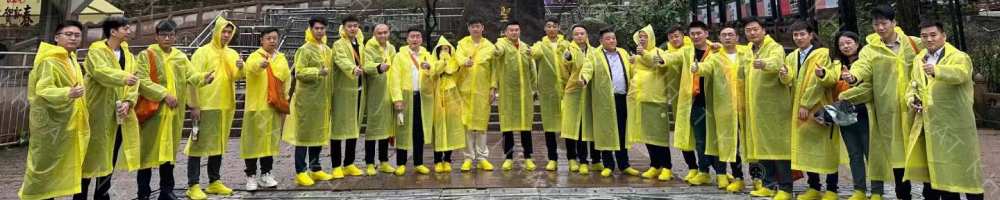
Depending on your needs and budget, there are many different types of uniform raincoats to choose from:
- Batwing raincoat: Traditional style, loose fit, easy to wear, suitable for many people.
- Rain suit: Includes a separate jacket and pants, providing better full-body coverage, suitable for people who frequently travel by motorbike.
- Trench coat: Stylish and elegant design, suitable for office environments or events.
- Transparent raincoat: Made of transparent PVC material, allowing the outfit underneath to be visible, suitable for performances and events.
Reflective raincoat: It has reflective strips that enhance visibility in low-light conditions, making it suitable for workers working at night or on construction sites.
10. Applications of Uniform Raincoats
Uniform raincoats are widely used in many fields:
- Delivery: Delivery drivers (shippers) frequently work outdoors and need raincoats to protect goods and stay healthy.
- Build: Construction workers work on construction sites and are frequently exposed to harsh weather conditions.
- Tourism: Travel companies provide raincoats for staff and customers to ensure trips are not interrupted by the weather.
- Outdoor events: Outdoor events require raincoats as a precaution in case of rain.
- Businesses with employees who work outdoors: Companies with employees who regularly work outdoors, such as security guards, cleaning staff, landscaping staff, etc.
School: Equipping students for extracurricular activities.
11. Important Considerations When Ordering Custom-Made Raincoats for Uniforms
11.1. Clearly define usage needs
Before placing an order for uniform raincoats, businesses need to clarify the purpose and target users of the raincoats, as well as specific requirements regarding style, color, quantity, and size.
11.2. Choosing the right material
Choosing the right fabric is crucial, greatly affecting the waterproofing ability, durability, and comfort of a raincoat. Recommended fabrics include PVC for absolute waterproofing, parachute fabric for high durability and aesthetics, and lightweight and soft honeycomb parachute fabric.
11.3. Choose a suitable design
Raincoat design needs to ensure:
- Good rain protection: Raincoats must be wide and long enough to cover the entire body, have a hood, and be sewn securely to prevent rainwater from splashing in.
- Comfortable: The raincoat is not too tight, and does not cause stuffiness or discomfort when worn.
- Convenient: Includes storage bags (if needed), easily foldable and portable.
Reflect brand identity (if needed): Logos and company information can be printed or embroidered.
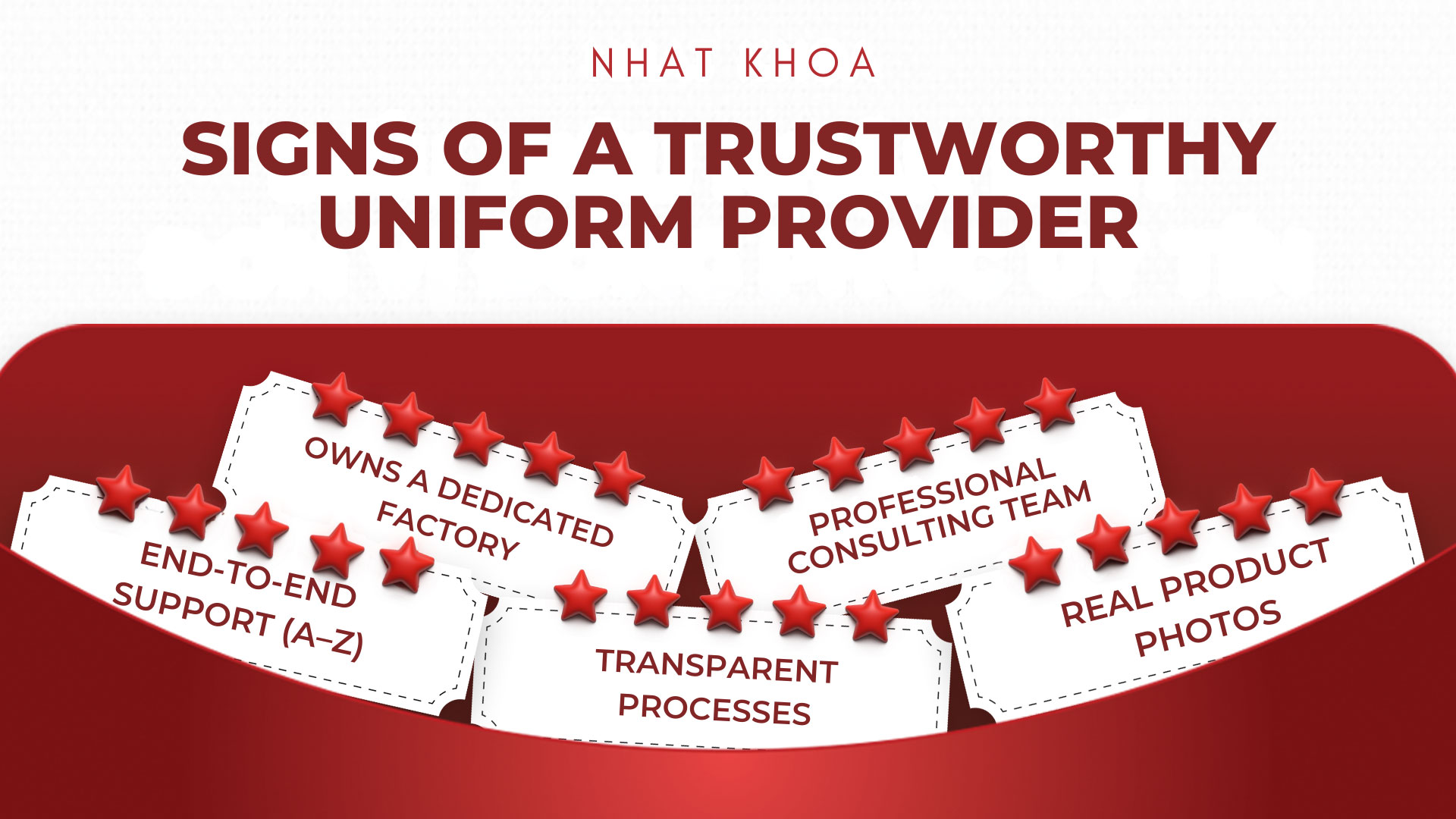
11.4. Choose a reputable garment factory.
The garment factory plays a crucial role in determining product quality. It’s essential to choose a factory with experience, a good reputation, modern equipment, a skilled workforce, excellent service, and reasonable prices.
12. Nhat Khoa – A Reputable Address for Custom Raincoat Manufacturing in Ho Chi Minh City
Nhat Khoa is proud to be a company with over 20 years of experience in the field of uniform manufacturing, especially uniform raincoats. We have been supplying raincoats to many businesses in various sectors, from delivery and construction to tourism and event organizing, etc.
12.1. Experience and Reputation
With over 20 years of experience, Nhat Khoa has built a solid reputation in the uniform manufacturing market. We are a trusted partner of many large and small businesses nationwide, providing high-quality raincoats that meet all customer requirements.
12.2. Professional Team
Nhat Khoa boasts a team of skilled designers and tailors with at least 15 years of experience in the uniform manufacturing industry. Our team not only has in-depth knowledge of fabrics and sewing techniques, but also constantly updates itself with the latest design trends, ensuring that we deliver raincoats that are both practical and aesthetically pleasing.
12.3. Free consultation and design
Understanding the importance of building brand image and meeting customer needs, Nhat Khoa offers free consultation and design services for uniform raincoats. We will listen to your opinions and requirements to create unique designs that suit your company’s characteristics.
12.4. Competitive pricing
As a direct garment factory, without any intermediaries, Nhat Khoa is committed to offering customers the most competitive prices on the market. We optimize our production process and import raw materials directly from reputable suppliers to minimize costs and maximize benefits for our customers.
12.5. Ensuring quality and on-time delivery
Product quality and delivery time are two top priorities for Nhat Khoa. We use high-quality fabrics with clear origins and strictly control the production process to ensure that every uniform raincoat product meets the highest quality standards. At the same time, we are committed to delivering on time as agreed with our customers.
